
Mozart: Dances & Orchestral Works
Catalog Number: OC26008B
Mozart: Dances & Orchestral Works
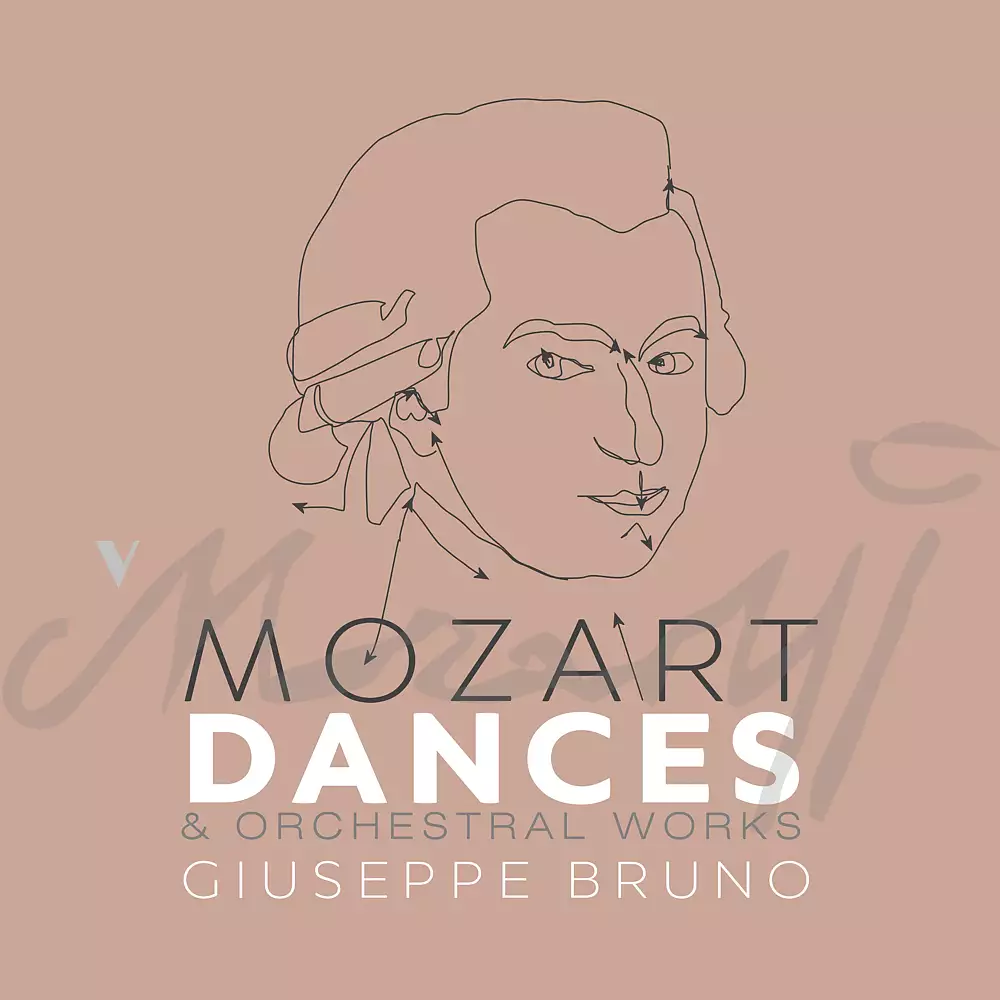


Wolfgang Amadeus Mozart – Dances & Orchestral Works
Giuseppe Bruno, piano
Dance music occupied an important place in the musical life of eighteenth-century Europe, particularly in Vienna, where public balls, court festivities, and social gatherings regularly required new music. Within this vibrant cultural environment, Wolfgang Amadeus Mozart composed a large number of dances—minuets, contredanses, and German dances—works that, despite their functional origins, reveal the unmistakable elegance and wit of his musical language.
Although many of these pieces were written for orchestral performance at court celebrations, they possess a charm and vitality that transcends their original context. Beneath their apparent simplicity lies Mozart’s extraordinary gift for melody, balance, and character. Even in the briefest dance movement, a graceful melodic turn or a subtle harmonic shift can transform a conventional form into something uniquely expressive.
The minuet, with its poised triple meter and refined courtly character, was one of the most popular dance forms of the time. In Mozart’s hands, the genre becomes a vehicle for elegance and symmetry, where delicate melodic lines unfold with effortless grace. The German dances, by contrast, often display a more rustic energy and rhythmic spontaneity, anticipating the spirit that would later find expression in the Viennese waltz.
The contredanses—lively dances associated with social gatherings and group choreography—reveal yet another facet of Mozart’s style. Their rhythmic vitality and clear phrase structures made them ideal for dancing, but they also demonstrate Mozart’s ability to craft memorable musical ideas within concise forms.
Transcribed for the piano, these orchestral dances reveal new dimensions of texture and color. The keyboard becomes a space where orchestral gestures are transformed into a more intimate musical language, allowing the listener to appreciate the clarity of Mozart’s writing and the structural elegance of these miniature forms.
In this recording, pianist Giuseppe Bruno brings a sense of lightness, precision, and stylistic awareness to these works. His interpretation highlights the rhythmic vitality and melodic grace that define Mozart’s dance music, while also revealing the subtle humor and refinement that lie beneath their surface.
Heard together, these dances and orchestral pieces offer a fascinating glimpse into a lively musical world in which art and social life were closely intertwined. Far from being mere occasional works, Mozart’s dances reflect the same creative brilliance that characterizes his larger compositions—music that continues to delight with its elegance, vitality, and timeless charm.
Published date
2026-07-04
Number of discs
2
Channels
stereo:24:2.0
stereo:24:2.0
Made in Sweden since 1999. In collaboration with Textalk.
Cart
| Artikel | Antal | Beskrivning | a pris | Totalt |
Env.session:
NULL


Env.order NULL


string(2) "en"


collector.CheckoutUrl


collector.OrderItemCount
0

collector.CartUrl
NULL


collector.Order
NULL