
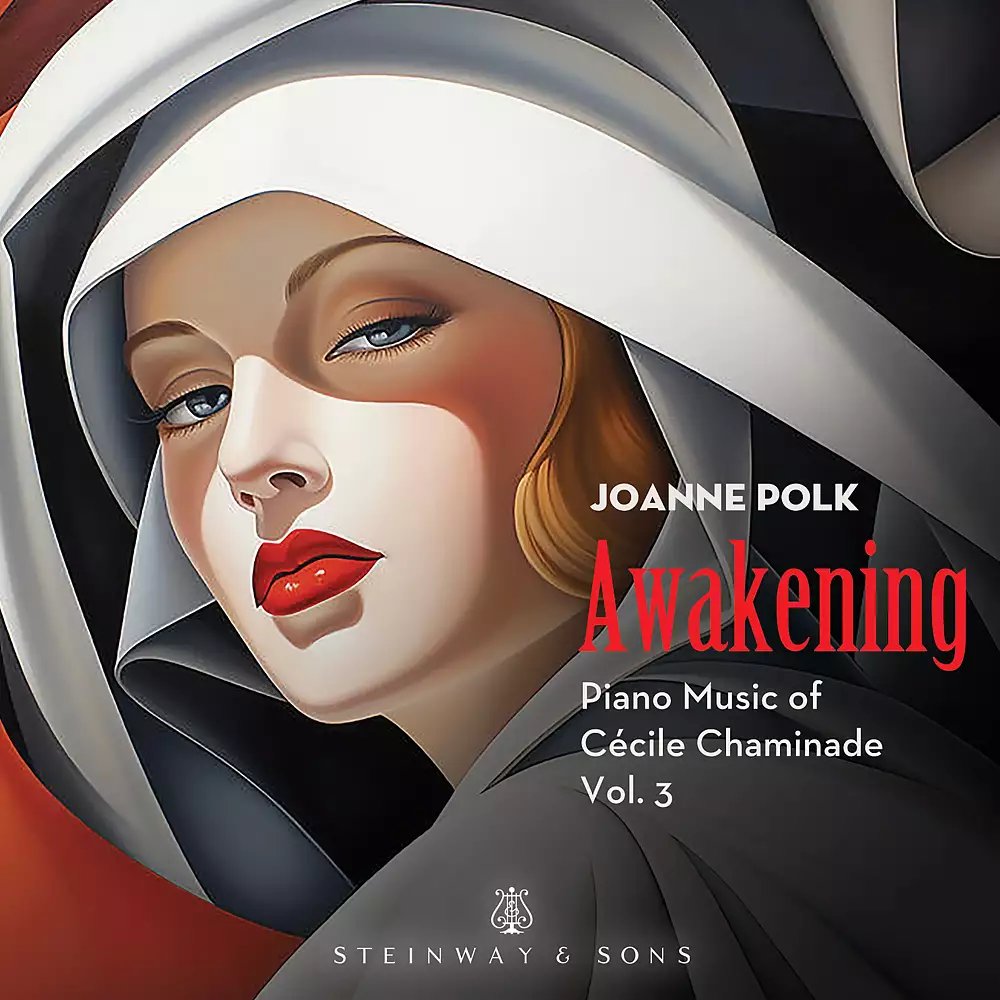
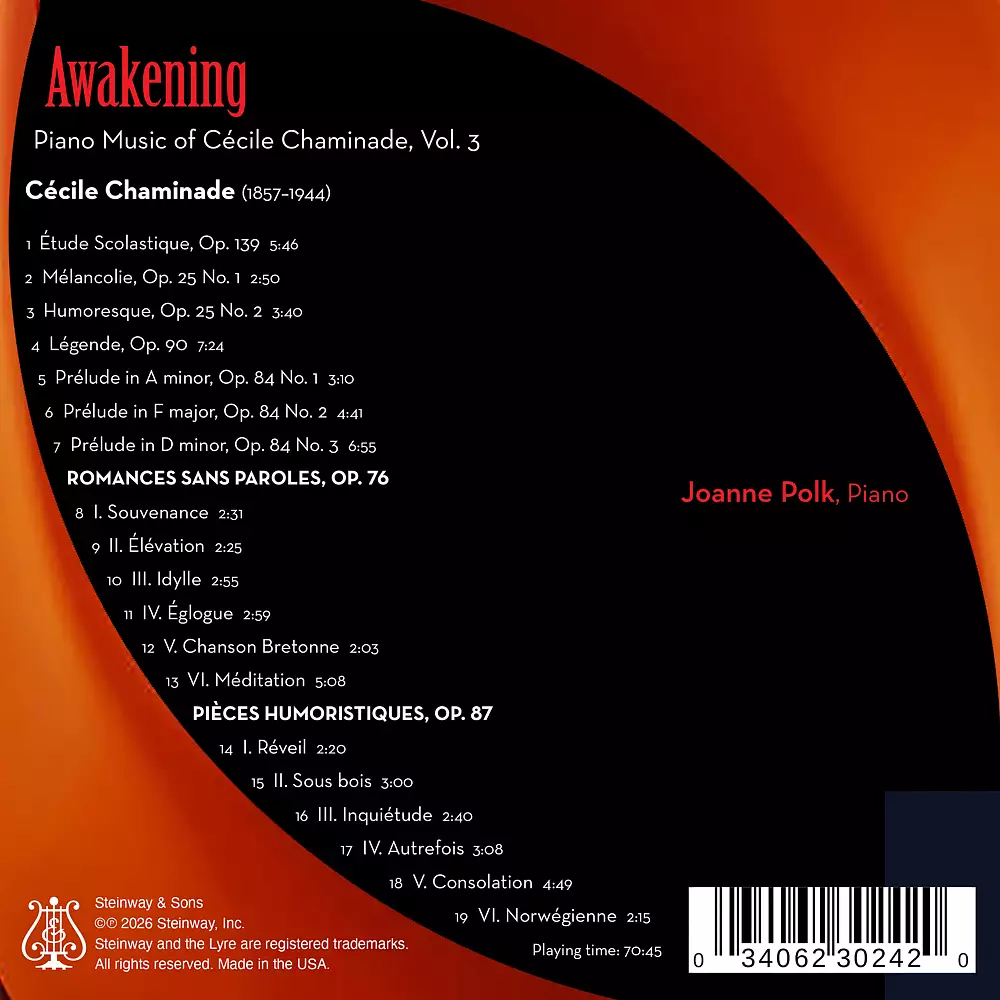
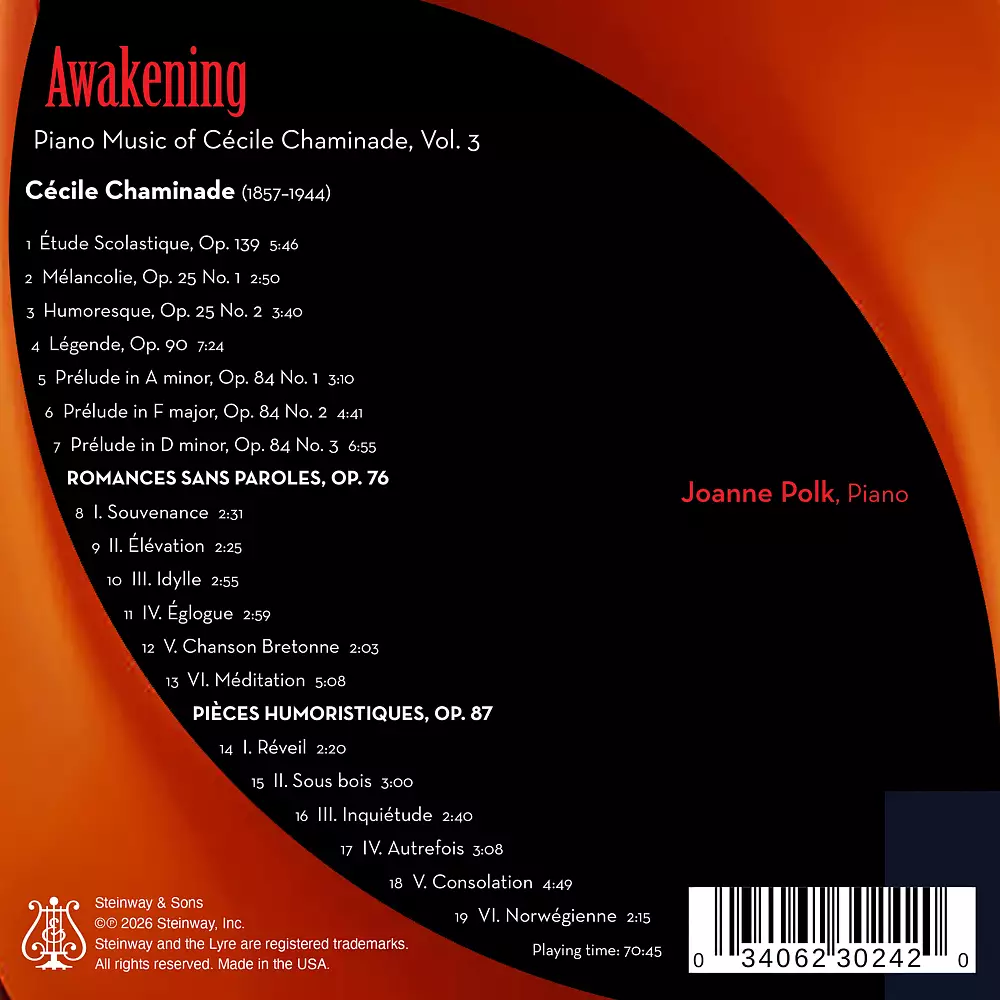
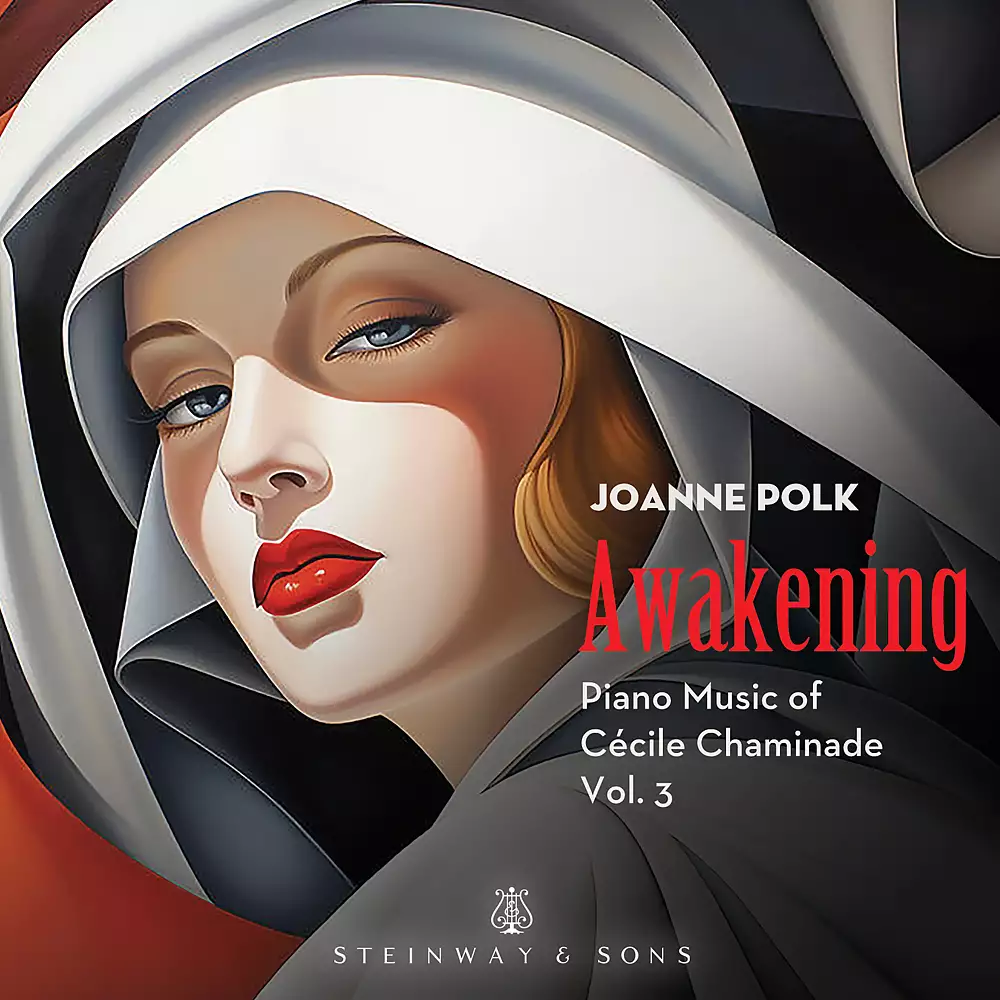
Awakening - Piano Music of Cécile Chaminade, Vol. 3
Catalog Number: Steinway30243
The third volume in a series devoted to the piano music of Cécile Chaminade, one of the few women composers to win real fame in the 19th century – elegant, melodious and characterful music that deserves to be far better known.
Sample rate
96000 Hz
Awakening - Piano Music of Cécile Chaminade, Vol. 3


From the beginning of time until well into the mid-20th century, the role of a woman in society was often defined as that of a caretaker who birthed children, raised families, cooked, and kept an orderly household. Only rarely did women enter the workforce, and this was especially true of women in music, where their participation was limited mostly to appearances in operas that required soprano voices. But any woman who wanted to compose found herself facing insurmountable hurdles to success, based on the accepted biological theory that women didn’t have the same creative DNA as men.
There was, of course, a handful of women throughout history (from the Renaissance masters Francesca Caccini, Barbara Strozzi and Élisabeth Jacquet de la Guerre to the more famous 19th-century female composers Clara Schumann and Fanny Mendelssohn, who proved the exception to that theory. But the success of these women was partly the result of their connection to male relatives in the music business who were positioned to assist the development of their careers. Despite the success of these few exceptional women, the dearth of female composers continued well into the mid-19th century, at which time they were finally released from household servitude and allowed to study composition at the major conservatories of Europe.
But just prior to that change of thinking regarding female composers, there appeared in both Europe and America, several women who managed to compose without a conservatory education. Among this group was the prolific French composer/pianist Cécile Chaminade (1857-1944). Although she was accepted into the Paris Conservatory, her father refused to let her enroll because he held the old-fashioned view that women of high society should never study music in a public setting. Instead, he arranged for Cécile to study privately with some of the conservatory faculty.
As a composer who lived across the turn of the century, Chaminade found the roots of her compositional style in the great Romantic works of composers such as Schumann, Liszt, and Brahms. For that reason, she composed in a tonal style that was common throughout the 19th century. Her catalogue of compositions includes a prolific list of approximately 400 works in all the popular genres of the time: a symphony, a ballet, two orchestral suites, a very popular concertino for flute and orchestra, two piano trios, and 150 songs (mélodies). But her most important and popular compositions are her over 200 works for solo piano. This group includes a sonata, two mazurkas, many concert etudes, and numerous salon pieces with programmatic titles. Chaminade rose to considerable fame based on these piano works, which she advertised through extensive tours across both Europe and America. Chaminade even wrote two instructive articles aimed at training potential buyers of her music on the performance of these works. The first of these articles appeared in The Ladies’ Home Journal in 1905 under the title “How to sing and play my compositions,” and the other was published in Etude magazine in 1908 with the title “How to play my best-known pieces.”
As time wore on and music after 1900 turned to the modern atonal style practiced by revolutionary composers such as Schoenberg and Stravinsky, Chaminade found herself ever more out of fashion as she continued to write the kind of short piano works that had made her famous. But she, like most other female composers who lived across the change of century, refused to adopt the modern atonal style and serial techniques that characterized the work of her male contemporaries, and thus fell into obscurity in the final years of her life.
The recent resurrection of works by women who lived in the 19th and early 20th centuries has brought a treasure trove of new listening opportunities. Thanks largely to the efforts and dedication of pianist Joanne Polk, this beautiful, well-crafted music by composers such as Amy Beach, Louise Farrenc, Clara Schumann, Fanny Mendelssohn, and Cécile Chaminade has finally come to light and is appearing on recitals by the most respected pianists of today.
Nearly all the pieces heard on this recording are miniatures, many of which fall into the genre known as “character pieces.” These are works usually with descriptive titles, such as “Mélancolie,” “Légende,” “Meditation,” and “Chanson Bretonne,” the mood of which is hopefully hinted at in the title of each piece. Their formal structure is based on either a simple three-part (ABA) structure (as in Mélancolie) or on the alternation of two contrasting ideas (as in the especially beautiful “Meditation”). This recording also features six pieces collected under the title “Romances sans Paroles,” (songs without words) that are clearly modeled after the more famous “Lieder ohne Worten” by Felix Mendelssohn. Seven more character pieces are grouped under the title “Pièces Humoristiques,” which includes the title work for this album, “Reveil” (awakening).
In the final analysis, audiences and pianists alike are ripe for new repertoire, and the dissemination of the music of Cécile Chaminade (and others of her generation) thanks to recordings like this one goes a long way to correcting decades of oversight and neglect of so much attractive music.
– Dr. Jeffrey Langford, Emeritus Professor of Music History,
Manhattan School of Music
Published date
2026-11-06
Number of discs
1
Sample rate
96000 Hz
Channels
stereo:24:2.0
Made in Sweden since 1999. In collaboration with Textalk.
Cart
| Artikel | Antal | Beskrivning | a pris | Totalt |
Env.session:
NULL


Env.order NULL


string(2) "en"


collector.CheckoutUrl


collector.OrderItemCount
0

collector.CartUrl
NULL


collector.Order
NULL