
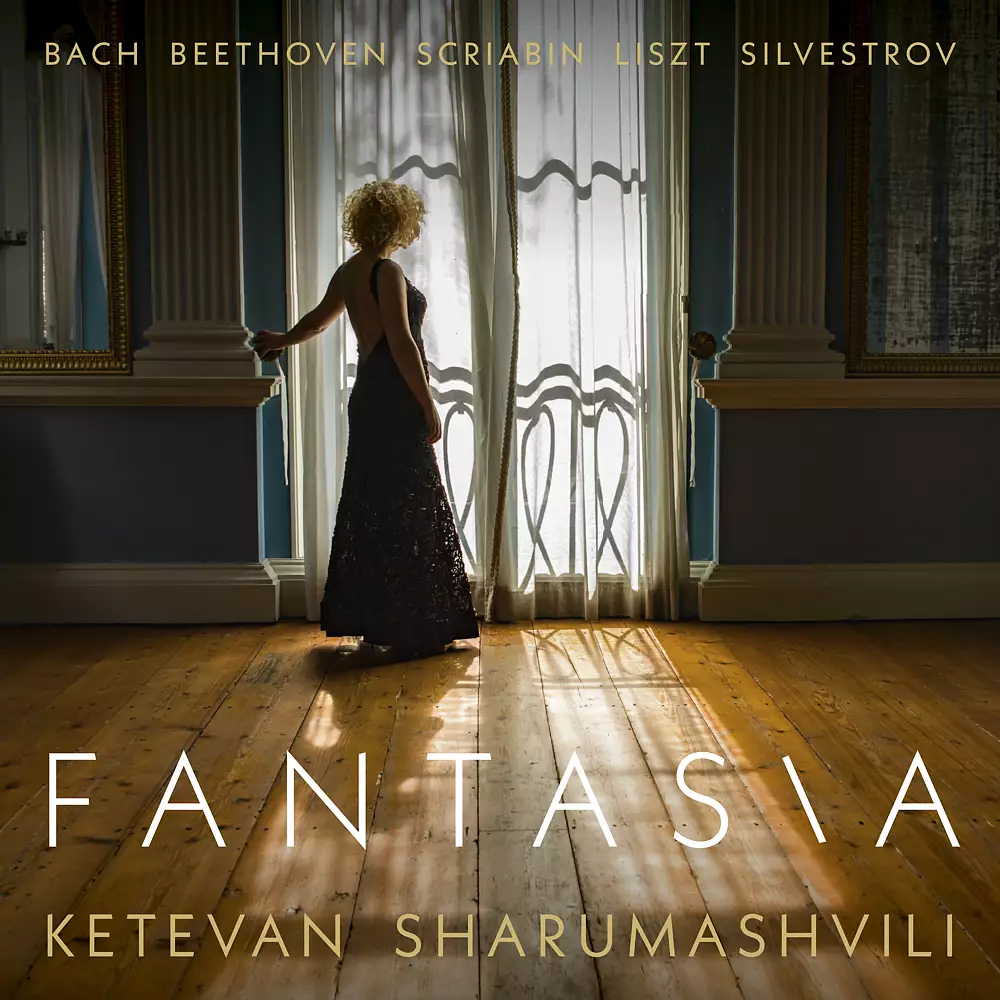
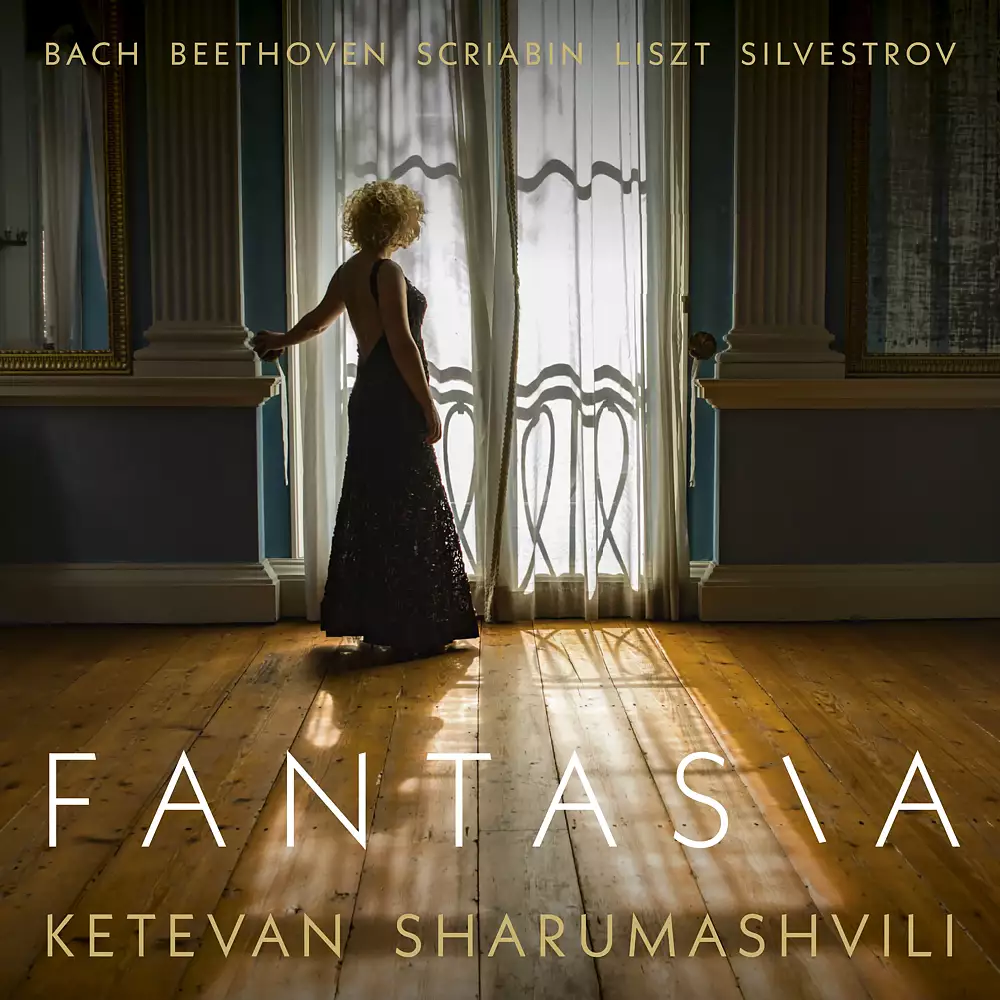
Fantasia
Catalog Number: ZEF9716
Fantasia


BACH
C. P. E. Bach’s Fantasia in F-sharp minor, Wq. 67,
is a striking example of the Empfindsamer Stil, a
musical language centered on emotional immediacy
and expressive freedom. The work unfolds in a
highly improvisatory manner, with abrupt contrasts,
unexpected silences, and sudden harmonic shifts
that mirror the volatility of human feeling. Rather
than following a fixed form, the fantasia moves
as a succession of expressive impulses, giving the
impression of spontaneous invention. Its intense
rhetoric, dramatic pauses, and expressive dissonances
anticipate later Romantic aesthetics, revealing C. P.
E. Bach as a crucial bridge between the Baroque
tradition and the emotional individualism of the
nineteenth century.
BEETHOVEN
Beethoven’s Piano Sonata quasi una fantasia No. 13 in
E-flat major, Op. 27 No. 1, challenges the conventions
of the Classical sonata by prioritizing continuity and
character over formal symmetry. The movements
flow without strong contrasts, creating the impression
of a single, evolving musical thought rather than a
sequence of separate forms. Beethoven experiments
with texture, rhythm, and mood, blending lyricism
with subtle tension. By labeling the work quasi una
fantasia, he signals a new compositional freedom,
anticipating the Romantic idea of the sonata as a
vehicle for personal expression rather than a fixed
formal blueprint.
LISZT
Liszt’s Fantasia quasi una sonata (Dante Sonata)
is a dramatic and visionary piano work inspired
by Dante’s Divine Comedy. Rather than following
classical sonata form, Liszt uses a free, fantasy-like
structure to depict a journey through darkness,
struggle, and transcendence. Highly virtuosic and
intensely expressive, the piece explores extremes
of harmony, texture, and emotion, culminating in a
luminous transformation that suggests redemption
and spiritual ascent. It stands as one of Liszt’s most
profound explorations of narrative, imagination,
and the piano’s symphonic potential.
SCRIABIN
Scriabin’s Piano Sonata No. 2 in G-sharp minor,
Op. 19, often called the Sonata-Fantasy, blends
late-Romantic lyricism with an emerging personal
harmonic language. Inspired by images of the
sea, the work unfolds in two movements that
contrast nocturnal calm with restless motion.
The first movement evokes a mysterious, moonlit
atmosphere, marked by fluid textures and chromatic
harmonies, while the second builds waves of energy
through sweeping figurations and surging climaxes.
Though still rooted in traditional tonality, the sonata
already reveals Scriabin’s fascination with color,
ecstasy, and the idea of music as a vehicle for inner
transformation.
Scriabin’s Fantasy in B minor, Op. 28, is a highly
expressive, single-movement work that marks
a pivotal moment in his artistic development.
Combining sweeping Romantic gestures with
increasingly adventurous harmony, the piece unfolds
as a continuous psychological narrative rather than
a formal structure. Lyrical introspection alternates
with turbulent, impassioned episodes, creating a
sense of constant transformation. The fantasy-like
form allows Scriabin to explore freedom of tempo,
texture, and tonal direction, foreshadowing his later,
more mystical style. The work exemplifies Scriabin’s
growing belief in music as an intensely personal and
visionary form of expression.
SILVESTROV
Valentin Silvestrov’s Zwei Dialoge mit Nachwort
is a contemplative piano work that reflects the
composer’s characteristic “metamusical” style,
in which music seems to echo memories of itself.
The two dialogues unfold as quiet exchanges
between fragile melodic fragments, silences, and
resonant harmonies, suggesting an intimate, inward
conversation rather than dramatic argument. Time
feels suspended, with simplicity and restraint
creating emotional depth. The concluding Nachwort
(epilogue) functions as a gentle afterthought, fading
into stillness. Rather than asserting new ideas, the
piece listens, remembers, and reflects, inviting
the performer and listener into a shared space of
attentive, poetic listening.
Published date
2026-05-22
Number of discs
1
Channels
stereo:24:2.0
Made in Sweden since 1999. In collaboration with Textalk.
Cart
| Artikel | Antal | Beskrivning | a pris | Totalt |
Env.session:
NULL


Env.order NULL


string(2) "en"


collector.CheckoutUrl


collector.OrderItemCount
0

collector.CartUrl
NULL


collector.Order
NULL