
Inbal Megiddo Complete Bach Cello Suites
Catalog Number: ACD233
Inbal Megiddo Complete Bach Cello Suites
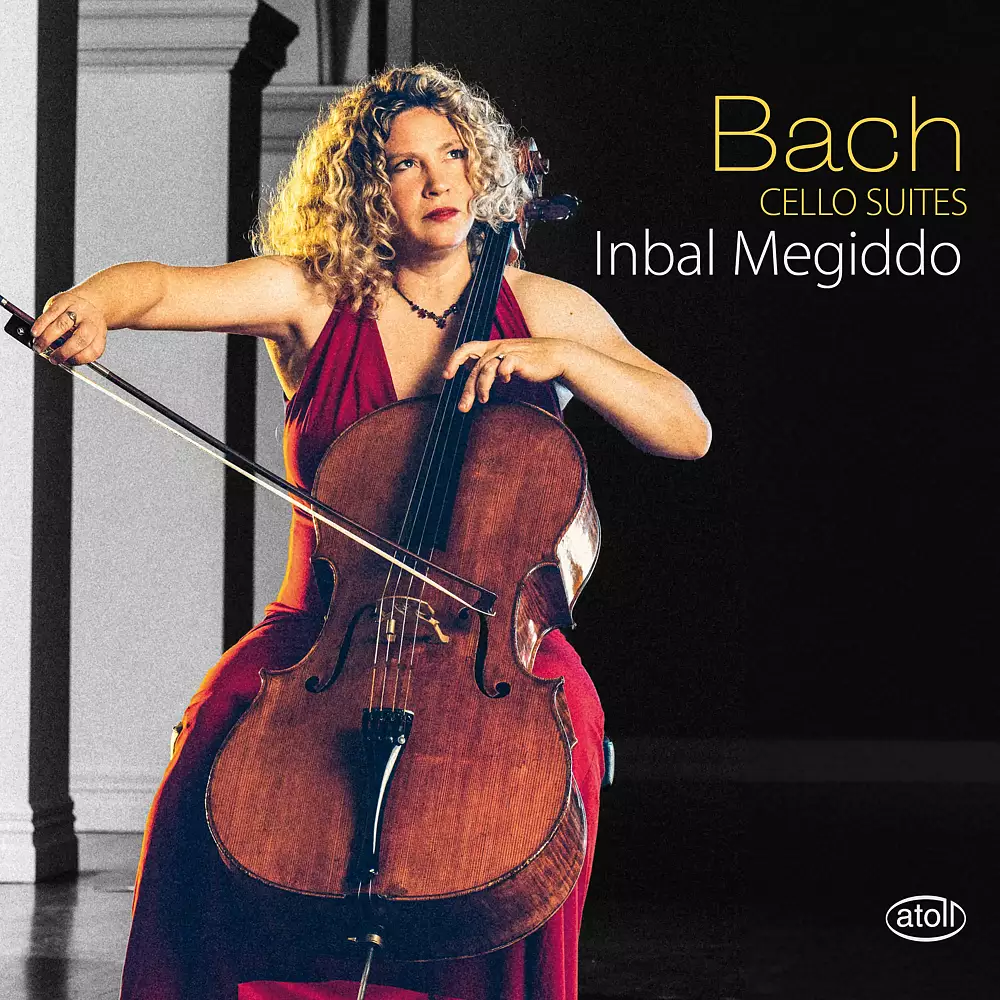
While much of Bach's music is deeply associated with the church, for six years Bach served as Kapellmeister at the small Calvinist court at Köthen, where sacred music did not hold much importance. Bach was in a unique position, having the resources and the freedom to compose what he wished. It is likely that the six suites for unaccompanied cello were written during this time between 1720 and 1723.
J.S.Bach was not a cellist himself, and it is uncertain whether he wrote the Suites for a particular performer. But despite not being a cellist, his knowledge of the instrument must have been profound as he managed to create what music historian Christoph Wolff describes as "maximum effect with a minimum of instrumental tools." The baroque cello was most often relegated to providing a bass line, but with the Suites, Bach transformed the cello from accompanist to soloist, demonstrating that it could go well beyond its customary role. In the Suites, one cello alone provides the bass, dense counterpoint, refined harmonies
and rich musical structure. And in doing so, Bach stretches the cellist's technique, making full use of the instrument's range and possibilities.
As Bach's original manuscripts of the Suites are lost, each performer must create her own edition based on the surviving copies: one by Anna Magdalena Bach, one by Johann Kellner, and two more anonymous copies. These copies have hardly any dynamic markings, and sloppy penmanship leaves bowing up to interpretation. While one can mourn the loss of the original manuscripts, and with them, the definitive answers, this mystery, the veil between composer and performer, is part of the magic of the Suites. Janos Starker once said that one of the pleasures of going to heaven will be that he will finally be able to discuss with Bach himself exactly how to play the Suites. But this mystery is what gives the interpreter the sublime freedom to create, in the never-ending search for beauty and truth.
The Structure and Character of the Suites
Each of Bach's six cello suites follows the standard Baroque dance-suite structure, yet each possesses its own distinct character and technical challenges. Every suite begins with a Prelude, a free-form introduction that establishes the key and mood, followed by the Allemande, Courante, Sarabande, a pair of Galanteries (Minuets
in Suites 1 and 2, Bourrées in Suites 3 and 4, and Gavottes in Suites 5 and 6), and concludes with a lively Gigue.
The first three suites (G major, D minor, and C major) were likely written for a standard four-string cello, while the fourth (E flat major) pushes the boundaries of the instrument's range. The fifth suite (C minor) calls for scordatura tuning, with the A string tuned down to G, creating darker sonorities and allowing for otherwise
impossible chord combinations. The crowning sixth suite (D major) was composed
for a five-string instrument (with an additional high E string), enabling Bach to explore a significantly expanded range and creating a luminous, almost celestial quality in the highest register.
These works showcase Bach's genius in implied polyphony – the suggestion of
multiple voices through a single melodic line. Through carefully crafted arpeggios, strategic placement of notes, and clever voice-leading, Bach creates the illusion that the listener is hearing multiple instruments. This compositional technique allows the Suites to feel complete and self-contained despite being performed on a single instrument.
The Suites remained largely unknown until the early 20th century when Pablo
Casals discovered an edition in a Barcelona thrift shop. After studying them for
twelve years before performing them publicly, Casals brought these masterpieces
into the standard repertoire, recognizing them as not merely technical exercises
but profound artistic expressions.
What makes these suites endlessly fascinating is how they contain multitudes
of expression. On some days, I find joy even in the melancholy of the Fifth Suite;
on others, I discover unexpected shadows in the sunny First. Like life itself, they
reveal new facets with each return, changing as we change, growing as we grow.
In this way, they become not just music to perform but companions on life's path,
offering both mirror and window, reflection and vision, as we make our own
journey through the movements of existence.
Inbal Megiddo
Published date
2025-10-17
Number of discs
1
Channels
stereo:24:2.0
Made in Sweden since 1999. In collaboration with Textalk.
Cart
| Artikel | Antal | Beskrivning | a pris | Totalt |
Env.session:
NULL


Env.order NULL


string(2) "en"


collector.CheckoutUrl


collector.OrderItemCount
0

collector.CartUrl
NULL


collector.Order
NULL