
Christmas Trios
Catalog Number: 7327
Christmas Trios
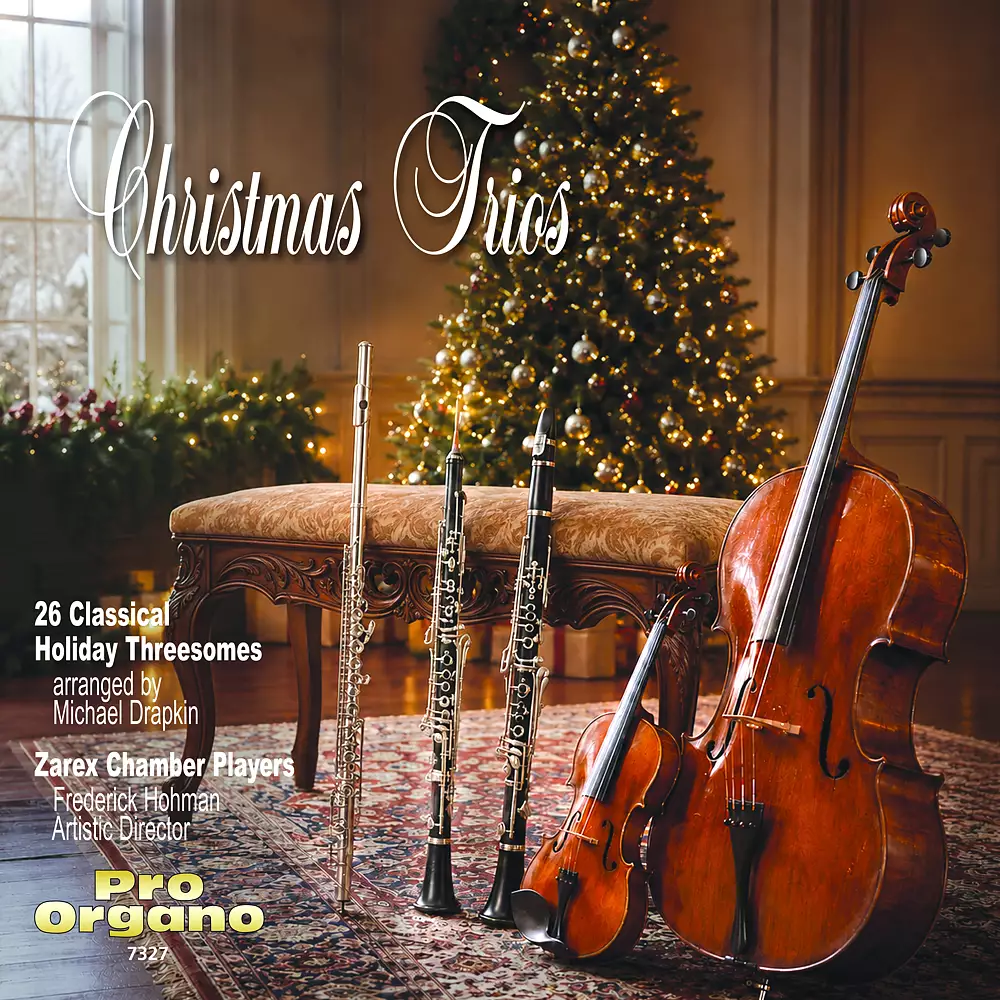
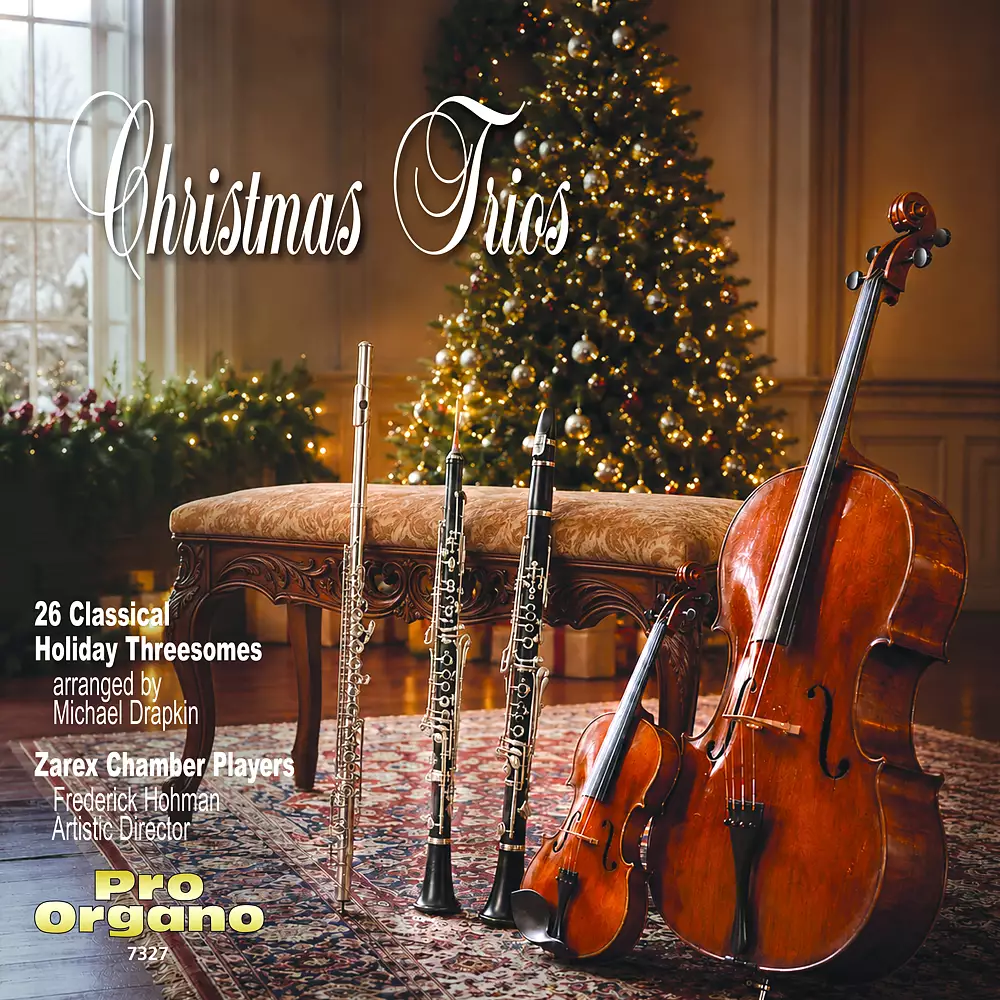
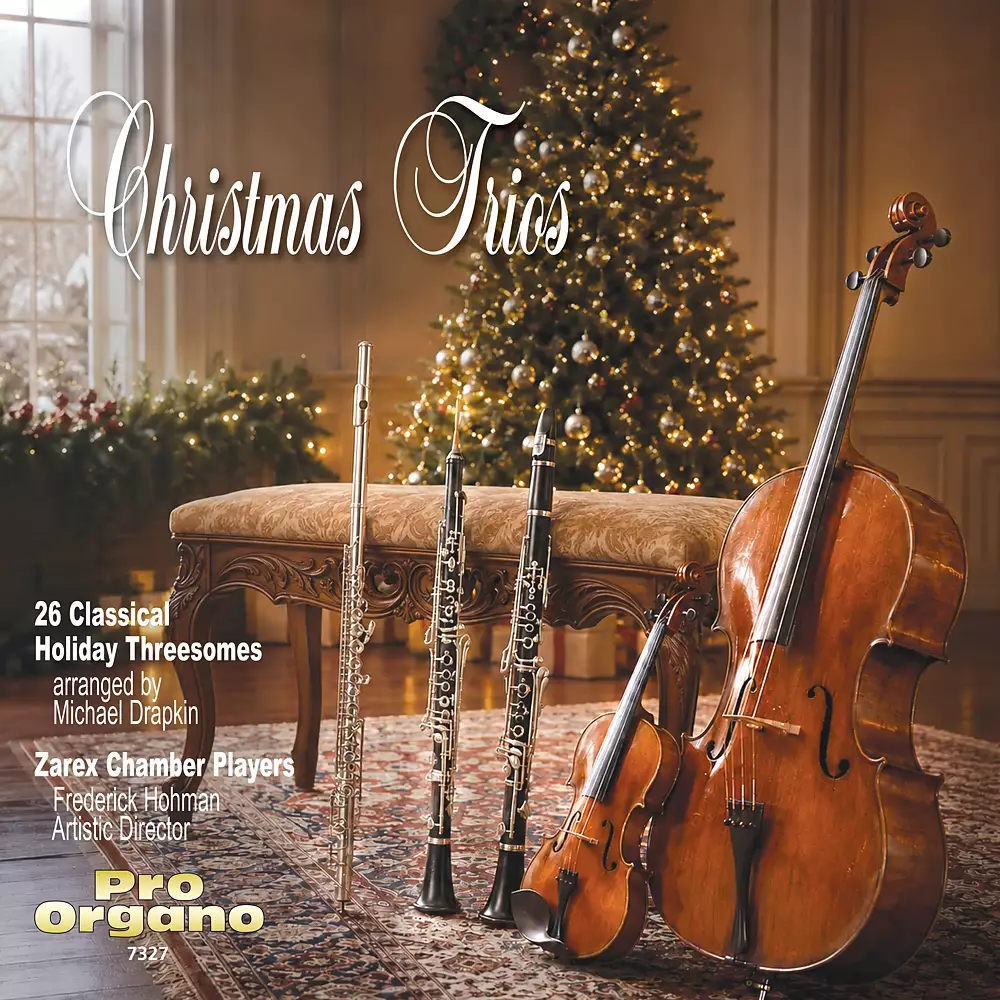
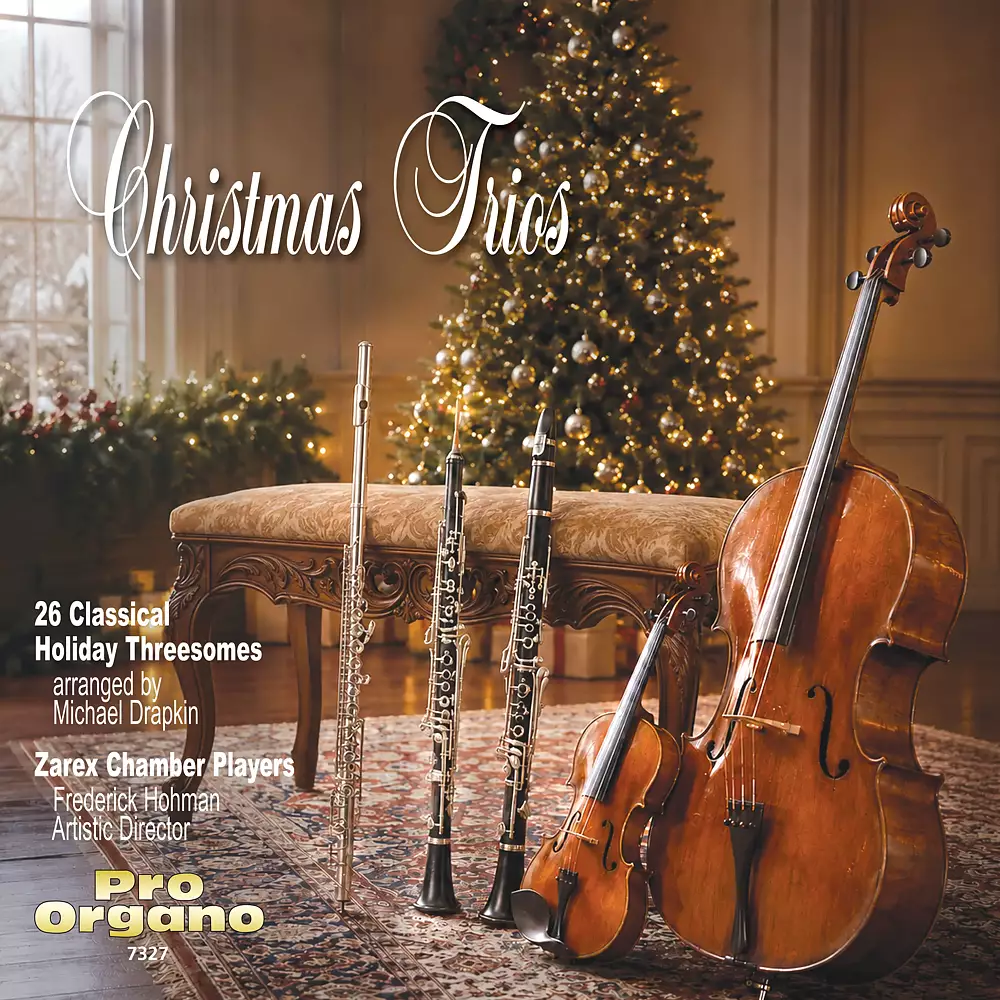


In “Christmas Trios,” the celebrated clarinetist, bass-clarinet authority and music arranger Michael Drapkin proves that charming music for the Christmas holiday season can be made very compellingly and efficiently by combining only three musicians, performing together as an instrumental trio. In these trio arrangements, the melody line is the top-most part; then there is a middle part, slightly lower in pitch, which provides harmony under the top voice; and a bass line, or low part, that serves to ground the harmony. In his trio arrangements, Michael Drapkin has combined strings and woodwinds in varying combinations throughout this program of 26 sacred and secular Christmas season tunes. The specific instrumentation for each selection is detailed along with the title of each piece in the notes below.
The individual tracks on this “Christmas Trios” album may be licensed for many purposes, including musical backgrounds or musical themes for television programming, motion-pictures and internet podcasts, just to name a few. For more information on licensing individual tracks from this album, please contact Michael Drapkin at Drapkin Music Publications [info@bassclarinet.net] or the licensing agent at Naxos Digital Services US, lnc., Nick Floyd [nick.floyd@naxosusa.com].
TRACK 01 - Angels We Have Heard on High ("Gloria”) (Instrumentation: 3 Trumpets)
This beloved Christmas carol traces its origins to eighteenth-century France, where it first appeared as Les Anges dans nos campagnes ("The Angels in Our Countryside"). The English text, first published in the nineteenth century, recounts the angels' joyful proclamation to the shepherds from the Gospel of Luke. The soaring refrain, "Gloria in excelsis Deo," features long, exuberant melismas that have become one of the most recognizable passages in all of Christmas music. Today, the carol remains a favorite throughout the world, celebrated for its jubilant spirit and brilliant musical climax. This track is the only track in this album to be scored for brass players.
TRACK 02 - Jingle Bells (Instrumentation: 2 Clarinets and 1 Bass Clarinet)
Perhaps the world's most famous sleigh song, Jingle Bells was composed by James Lord Pierpont in 1857 under the title The One Horse Open Sleigh. Surprisingly, it was written not for Christmas but for Thanksgiving festivities. Its infectious melody and vivid imagery of winter sleigh rides quickly made it a seasonal favorite, eventually becoming inseparable from Christmas celebrations. In 1965, Jingle Bells achieved another distinction by becoming the first song broadcast from space when astronauts aboard Gemini 6 playfully performed it during a mission.
TRACK 03 - It Came Upon the Midnight Clear (Instrumentation: 2 Clarinets and 1 Cello)
American pastor Edmund Hamilton Sears penned this reflective text in 1849 during a period of political unrest and social uncertainty. Rather than focusing solely on the Nativity, the hymn expresses a yearning for peace on earth amid human conflict. Richard Storrs Willis later composed the melody most commonly associated with the hymn in the United States. Its gentle, contemplative character offers a welcome contrast to the exuberance of many Christmas carols.
TRACK 04 - Good King Wenceslas (Instrumentation: 2 Violins and 1 Cello)
Published in 1853 by English hymn writer John Mason Neale, Good King Wenceslas tells the story of the tenth-century Duke Wenceslas of Bohemia, remembered for his generosity toward the poor. Rather than depicting the Christmas story itself, the carol celebrates Christian charity during the Feast of St. Stephen, observed on December 26. Its melody is considerably older than the text, originating from the thirteenth-century spring song Tempus adest floridum.
TRACK 05 - O Christmas Tree (Instrumentation: 2 Flutes and 1 Cello)
Known in German as O Tannenbaum, this traditional folk song praises the evergreen tree as a symbol of constancy and faithfulness. Although often associated with Christmas today, earlier versions had no holiday connection. The familiar lyrics date from 1824, when schoolmaster Ernst Anschütz adapted the song into its modern form. Its graceful melody has become one of the defining musical symbols of the Christmas season around the world.
TRACK 06 - We Three Kings (Instrumentation: 2 Oboes and 1 Bassoon)
Written by Episcopal clergyman John Henry Hopkins Jr. in 1857, We Three Kings is one of the few widely sung Christmas carols composed entirely by a single known author. The hymn recounts the journey of the Magi to Bethlehem, with successive verses reflecting the symbolic gifts of gold, frankincense, and myrrh. Its stately, almost processional melody evokes the solemn dignity of the Wise Men's pilgrimage.
TRACK 07 - The Twelve Days of Christmas (Instrumentation: 2 Clarinets and 1 Bass Clarinet)
This cumulative English folk song first appeared in print in 1780, though its origins likely reach much further into oral tradition. Each successive verse adds another increasingly elaborate gift, creating a delightful memory challenge for singers. While many interpretations have suggested hidden religious symbolism, historians generally regard it as a festive game song intended for holiday entertainment. Its playful structure has inspired countless adaptations and parodies.
TRACK 08 - While Shepherds Watched Their Flocks (Instrumentation: 1 Oboe, 1 Clarinet and 1 Cello)
This carol occupies a unique place among English Christmas hymns because its text comes directly from the Gospel of Luke. Written in 1700 by Irish hymn writer Nahum Tate, it was among the earliest hymns approved for use in the Church of England. Over the centuries it has been sung to numerous melodies, reflecting the rich traditions of congregational singing throughout Britain.
TRACK 09 - In the Bleak Midwinter (Instrumentation: 2 Violins and 1 Cello)
The haunting text originated as a poem by Christina Rossetti, first published in 1872. Composer Gustav Holst later set it to music in 1906, though the equally beloved setting by Harold Darke followed a few years later. Rossetti's meditation moves beyond the Nativity itself to ask what gift each believer can offer the Christ child, concluding with the simple yet profound answer: "Give my heart."
TRACK 10 - Bring a Torch, Jeannette, Isabella (Instrumentation: 1 Flute, 1 Clarinet, and 1 Bass Clarinet)
This charming French Provençal carol first appeared in print in the mid-seventeenth century. Rather than depicting the shepherds or angels, it invites two young women to bring light as they quietly visit the infant Jesus. Its lively dance rhythms and bright melody reflect the joyful folk traditions of southern France, making it one of the most distinctive Christmas carols in the European repertoire.
TRACK 11 - The First Noel (Instrumentation: 1 Flute, 1 Oboe, and 1 Bassoon)
Probably originating in eighteenth-century Cornwall or western England, The First Noel preserves one of the oldest English Christmas melodies still widely sung today. The word "Noel" derives from the French word for Christmas. The carol recounts the story of Christ's birth through the visit of the shepherds and the journey of the Wise Men, culminating in triumphant praise of the newborn King.
TRACK 12 - God Rest You Merry, Gentlemen (Instrumentation: 1 Oboe, 1 Clarinet and 1 Bassoon)
Among the oldest surviving English Christmas carols, this traditional song was already well known by the eighteenth century. The opening line is frequently misunderstood: the comma belongs after "merry," meaning "May God keep you joyful, gentlemen." Its minor-mode melody lends the carol an ancient, mysterious quality while proclaiming the comforting message of Christ's birth "to save us all from Satan's power."
TRACK 13 - Coventry Carol (Instrumentation: 2 Oboes and 1 Bassoon)
The poignant Coventry Carol originated in a sixteenth-century mystery play performed in Coventry, England. Sung by mothers mourning the impending slaughter of the innocents ordered by King Herod, it stands apart from most Christmas music through its deeply emotional character. Its gentle lullaby melody has made it one of the most moving and enduring works of the Christmas season.
TRACK 14 - Go Tell It on the Mountain (Instrumentation: 1 Clarinet, 1 Oboe and 1 Bass Clarinet)
Emerging from the African American spiritual tradition of the nineteenth century, this joyful song celebrates the proclamation of Christ's birth with infectious energy. It was first collected and published by folklorist John Wesley Work Jr. in the early twentieth century, helping introduce the spiritual to wider audiences. Today it remains one of the most spirited expressions of Christmas rejoicing.
TRACK 15 - Hark! the Herald Angels Sing (Instrumentation: 2 Oboes and 1 Bass Clarinet)
Charles Wesley wrote this magnificent hymn text in 1739, though it originally began with the words "Hark, how all the welkin rings." More than a century later, Felix Mendelssohn composed the triumphant melody now inseparably associated with the hymn, adapted after his death by William H. Cummings. The result is one of the grandest and most theologically rich hymns in the Christmas tradition.
TRACK 16 - Deck the Halls (Instrumentation: 2 Clarinets and 1 Bass Clarinet)
This festive carol originated from the Welsh New Year's song Nos Galan, whose melody dates back to at least the sixteenth century. The famous refrain of "fa la la la la" echoes much older traditions of medieval vocal music. Although now firmly associated with Christmas, the song originally celebrated the arrival of the New Year and remains one of the most cheerful expressions of holiday merriment.
TRACK 17 - O Come, O Come, Emmanuel (Instrumentation: 1 Flute, 1 Oboe, and 1 Bassoon)
Among the oldest hymns in the Christmas repertoire, this Advent chant derives from medieval monastic traditions based on the "O Antiphons" sung during the final days before Christmas. The haunting melody, adapted from a fifteenth-century French processional, perfectly complements the hymn's themes of longing, hope, and the anticipated coming of the Messiah. Its modal character gives it an unmistakably ancient sound.
TRACK 18 - O Come, All Ye Faithful (Instrumentation: 2 Violins and 1 Bass Clarinet)
Originally written in Latin as Adeste Fideles, this hymn is generally attributed to English Catholic musician John Francis Wade around 1743. Although questions of authorship remain, the hymn quickly spread throughout Europe before Frederick Oakeley produced the familiar English translation in 1841. Its majestic melody has made it one of the most beloved processional hymns of the Christmas season.
TRACK 19 - Silent Night (Instrumentation: 2 Flutes and 1 Bass Clarinet)
On Christmas Eve 1818, Austrian priest Joseph Mohr asked schoolteacher and organist Franz Xaver Gruber to compose a simple melody for a poem he had written two years earlier. First performed with guitar accompaniment in the village of Oberndorf, Silent Night soon spread across Europe and eventually around the world. Its message of peace reached a powerful symbolic moment during the Christmas Truce of 1914, when soldiers reportedly sang the hymn across opposing trenches. Today it has been translated into hundreds of languages.
TRACK 20 - Joy to the World (Instrumentation: 2 Oboes and 1 Bassoon)
Isaac Watts wrote this exuberant hymn in 1719 as a paraphrase of Psalm 98 rather than as a direct Nativity text. The melody, attributed to Lowell Mason, incorporates themes from works by George Frideric Handel, though Handel himself did not compose the tune. Over time, the hymn became closely associated with Christmas because of its joyful celebration of Christ's coming to reign over the earth.
TRACK 21 - The Holly and the Ivy (Instrumentation: 2 Violins and 1 Cello)
This traditional English carol draws upon medieval symbolism connecting holly with Christ's passion and ivy with everlasting life. Although the melody commonly sung today dates from the early twentieth century, the lyrics preserve much older folk traditions celebrating both the Nativity and the natural beauty of winter. The intertwining images of evergreen plants reflect centuries-old Christmas customs throughout Britain.
TRACK 22 - I Saw Three Ships (Instrumentation: 2 Clarinets and 1 Bassoon)
This lively English carol first appeared in the seventeenth century, though its origins are likely older. The "three ships" have inspired numerous interpretations, from the vessels said to have carried the relics of the Magi to Cologne Cathedral to symbolic representations of the Wise Men themselves. Regardless of historical explanation, its buoyant rhythm and joyful refrain have made it a perennial favorite.
TRACK 23 - Jolly Old St. Nicholas (Instrumentation: 2 Violins and 1 Cello)
First published in the late nineteenth century, this cheerful American song reflects the growing image of St. Nicholas as the benevolent gift-giver familiar today. The anonymous lyrics invite children to whisper their Christmas wishes into Santa's ear, capturing the excitement and innocence of the holiday season. Its simple, memorable melody has made it a favorite for generations of young singers.
TRACK 24 - Up on the Housetop (Instrumentation: 1 Oboe, 1 Clarinet and 1 Bassoon)
Benjamin Hanby composed this delightful song in 1864, making it one of the earliest Christmas pieces centered on Santa Claus rather than the Nativity. Complete with reindeer, rooftops, and chimneys, it helped establish many familiar images of the modern American Christmas. Its lively tune and playful lyrics continue to delight audiences of all ages.
TRACK 25 - We Wish You a Merry Christmas (Instrumentation: 2 Violins and 1 Cello)
Originating in England's West Country during the sixteenth century, this traditional carol reflects the custom of neighborhood singers exchanging songs for seasonal treats. Its famous request for figgy pudding humorously reminds listeners that carolers often expected generous hospitality in return for their music. The cheerful refrain has become one of the world's most familiar musical greetings of the Christmas season.
TRACK 26 - Auld Lang Syne (Instrumentation: 2 Violins and 1 Cello)
Although associated primarily with New Year's Eve, Auld Lang Syne provides a fitting conclusion to many holiday celebrations. The text, preserved by Scottish poet Robert Burns in 1788, is set to a traditional Scottish melody. Its title roughly translates as "times long past," and its enduring message of friendship, remembrance, and shared experience offers a graceful farewell to the old year while welcoming the new.
Published date
2026-10-26
Number of discs
1
Channels
stereo:24:2.0
Made in Sweden since 1999. In collaboration with Textalk.
Cart
| Artikel | Antal | Beskrivning | a pris | Totalt |
Env.session:
NULL


Env.order NULL


string(2) "en"


collector.CheckoutUrl


collector.OrderItemCount
0

collector.CartUrl
NULL


collector.Order
NULL